Translate This Page


OLDEST MEMBER OF COG 7TH DAY DIES.

Sister Lillian (Cilla/Lillah) Davis born February 5th,1914 passed on September 4th 2011.She was an ardent member of the COG 7th Day,54 Rosalie avenue,Kingston 11. She was also well beloved in her community as she was a mother,father,friend and adviser. Her age of 97 is tremendous and the banner have now been passed on to Missionary Saide Williams who  was born in 1918 and is alive and doing well. 

admin/pc


From Ariela Pelaia, your Guide to Judaism

Rick Sanchez Out After Implying Jews Control the Media

Rick SanchezCNN has ousted anchor Rick Sanchez after he called Jon Stewart a "bigot" and implied that Jews control the media.


Sanchez appeared on Pete Dominick's Sirius radio show last week where the conversation turned to the topic of Jon Stewart, who frequently makes fun of Sanchez on The Daily Show. "I think Jon Stewart's a bigot," Sanchez said. A few minutes later Sanchez discussed what it's like to be an oppressed minority, at which point Dominick mentioned that Stewart, as a Jew, is a minority himself. In response "Sanchez seemed to make the claim that Jews run CNN and the news business in general and that Stewart thus did not in fact know what it was like to feel the sting of prejudice." From Dominick's blog:

Very powerless people... [snickers] He's such a minority, I mean, you know [sarcastically]... Please, what are you kidding? ... I'm telling you that everybody who runs CNN is a lot like Stewart, and a lot of people who run all the other networks are a lot like Stewart, and to imply that somehow they -- the people in this country who are Jewish -- are an oppressed minority? Yeah. [sarcastically]

That's right, CNN anchor Rick Sanchez basically suggested that Jews have run the media.

Pete asked, "They can't relate to that? A Jewish person doesn't have a constant fear in the back of their head that we could [inaudible] the Holocaust?"

"I think his father could," Sanchez replied, referring to Stewart.

"I think every Jewish person feels that way," Pete said.

"I hope so," Sanchez responded.

... Read more


Parting Of the Sea Could Have Happened

Sea Parting

If you've ever wondered whether the waters really could have parted when Moses and the Israelites left Egypt, you're not alone. Curious as to whether the Exodus story could have happened, researchers at the National Center for Atmospheric Research and the University of Colorado at Boulder decided to study the science behind the parting of the sea.

After analyzing maps of the region, archaeological records and satellite imagery, the researchers determined that an area south of the Mediterranean Sea would have been a coastal lagoon 3,000 years ago. It also would have been an ideal location for the biblical story, winds permitting. From the Telegraph:

The scientists found that an east wind of 63 mph blowing for 12 hours would have driven the shallow waters back, both into the lake and the river channel.

For a period of four hours, this would have created a land bridge about two miles long and three miles wide.

The waters really would have been parted, with barriers of water raised on both sides of the newly exposed mud flats.

As soon as the winds dropped, the waters would have rushed back, much like a tidal bore.

CNN adds that as the waters flowed back into the area anyone on the exposed mud flat would have drowned. "The simulations match fairly closely with the account in Exodus," said Carl Drews of NCAR, the lead author of the study.

Biblical parting of the Red Sea 'could have happened' [Telegraph]
Where did waters part for Moses? Not where you think [CNN]
Via Science behind the parting of the Red Sea [BoingBoing]     

admin/pc  4.10.10.

Abbas: Israel can call itself whatever it wants


PA President says he believes in "Palestinian state in '67 borders and state of Israel, living next to each other in peace and security."

  Palestinian Authority President Mahmoud Abbas said on Thursday that it was none of the Palestinians' business if Israel wanted to call itself a Jewish state or anything else.

"If the Israelis want to call themselves any name, they should address the international community and the United Nations because this is none of our business," Abbas told reporters after meeting with the President of Finland, Tarja Halonen, in Ramallah.

 admin/pc 10.14.10.

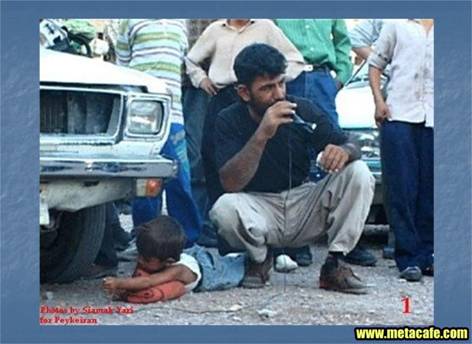
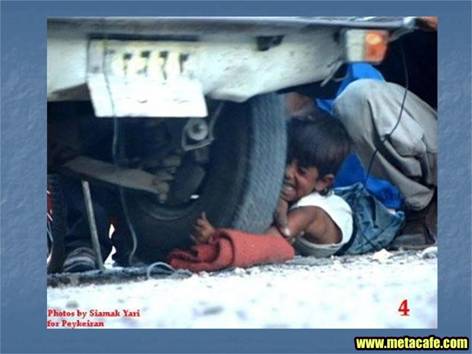
IS THIS REALLY HAPPENING IN OUR WORLD? YES IT IS AND IT IS DONE IN THE NAME OF RELIGION. BE ADVISED THAT NO TRUE  RELIGIOUS GROUP SHOULD EVER SUPPORT THIS HIDEOUS CRIME. PLEASE NOTE THAT THE BIBLE STATES: Mark 10:14  But when Jesus saw it, he was much displeased, and said unto them, Suffer the little children to come unto me, and forbid them not: for of such is the kingdom of God. 

SUPPLIED BY DEACONESS ANGELA MOSELEY

admin/pc  11.9.10.

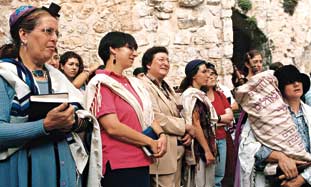
Why do Orthodox women not wear tefillin or tallit?


One potential problem raised in an early Bible translation is that tefillin and tzitzit might constitute men’s clothing.

  The widespread Orthodox practice is for women not to don tefillin or wear a tallit with tzitzit while praying.

Following the controversial arrests of a non-Orthodox woman who prayed at the Western Wall while wearing these articles, it behooves us to understand the underlying dispute within Jewish law.

As a general principle, talmudic law exempts women from performing timebound positive commandments, such as blowing a shofar on Rosh Hashana or dwelling in a succa (Kiddushin 29). The Talmud derives this principle from the commandment of tefillin, which are deemed “time-bound” since they are not worn on Shabbat or holidays (33b). Some explain that this is a pragmatic exemption which removes time pressure from women already consumed with household duties (Avudraham, Sha’ar 3), while others contend that women have superior inherent spiritual wisdom (bina) and do not require timely religious imperatives (Rabbi S.R. Hirsch, Leviticus 23:43). Be that as it may, the Talmud notes that there are many exceptions to this rule, with women remaining obligated in many time-bound commandments such as Shabbat and Pessah rituals.

The talmudic sages disagree whether women may nonetheless perform rituals for which they are exempt (Rosh Hashana 33a), thereby providing spiritual satisfaction (Sifra Vayikra 2) and an opportunity to receive reward for such voluntary actions (Kiddushin 31a). Normative law resolutely accepted the lenient opinion, to the extent that some decisors discuss whether certain commandments (like shofar blowing) have become obligatory because women regularly observe them (Yabia Omer OC 2:30).

Maimonides (Tzitzit 3:9) and Rabbi Yosef Karo, however, asserted that this optional behavior does not warrant a blessing, whose formula includes “Blessed are you... who has commanded us...,” since women were not commanded to perform these actions (Rosh Kiddushin 1:49). Others retorted that women may recite the blessing since they remain commanded in mitzvot in general and receive reward for such behavior (Tosafot, Ran RH 33a). While Ashkenazi decisors adopted this approach (OC 589:6), Sephardi practice remains divided, with some permitting the blessing (Birkei Yosef OC 654:2) and others demurring (Yabia Omer OC 1:42).

Given this background, one might expect that the donning of tefillin or a tallit should remain a viable option for women. In fact, with regard to a tallit, the sages recorded an opinion that women should (and did) wear tzitzit, even as normative law deemed it a time-bound commandment because one is not required to wear them at night (Menahot 43a). Similarly, the Talmud records that Michal, the daughter of King Saul, donned tefillin and did not receive rabbinic reproach (Ritva Eruvin 96a), with Rabbi Moses of Coucy and others specifically listing tefillin among the optional commandments women can perform (Hagahot Maimoniyot Tzitzit 3:9). Nonetheless, in each case, various factors were raised to remove exclude these rituals from popular practice.

One potential problem raised in an early Bible translation is that tefillin and tzitzit might constitute men’s clothing, thereby raising problems of cross-dressing (Targum Yonatan Deuteronomy 22:5). While a few decisors agreed with this sentiment (Levush OC 17:2), many rejected this concern since this prohibition only applies to articles of clothing worn for style or appearance, not to fulfill a commandment (Maharam Schick OC 173).

While various other reasons were historically raised against women wearing tefillin (Piskei Riaz RH 4:3), the primary objection stemmed from the requirement that one must maintain a “clean body” to don tefillin. As such, one may not wear tefillin if they believe they may fall asleep (OC 38:2). (This requirement is why most people do not wear tefillin throughout the day.) Rabbi Meir of Rothenburg contended that contemporary women could not fulfill this requirement, perhaps out of concern for dirtiness from menstrual blood. While some demurred, the majority ultimately agreed that women should not don tefillin, either by deeming Michal as an exceptional case (Aruch Hashulhan 38:6) or citing a different talmudic tradition which criticized her action (Beit Yosef 38:3).

While Rabbi Eliezer Berkovits and non- Orthodox rabbis claimed that women could still choose to vigilantly perform this mitzva, the vast majority of Orthodox decisors have determined that this practice is forbidden, since we are dealing with an optional commandment which women have not historically practiced (Eliahu Raba).


This latter
sentiment greatly impacted women wearing tzitzit, which is only required to be attached to a four-cornered garment like a tallit. Since women do not regularly wear such garments, Rabbi Moshe Isserles (OC 17:2) asserted that donning it would be an act of religious arrogance (yuhara). This position became widely accepted within Orthodox circles (Aruch Hashulhan), which became further emboldened in the face of the feminist critique (Igrot Moshe OC 4:49). This last factor has undoubtedly contributed to why these symbolic rituals have become such a flash point at the Western Wall.

Rabbi Brody, online editor of Tradition and its blog, Text & Texture (text.rcarabbis.org), teaches at Yeshivat Hakotel.

 *Dictionary meaning of Tefillin or Tallit is: (Judaism) either of two small leather cases containing texts from the Hebrew Scriptures (known collectively as tefillin); traditionally worn (on the forehead and the left arm) by Jewish men during morning prayer.

admin/pc 10.19.10.


Ahmadinejad urges scholars to enter interfaith dialogue


Iranian leader: "All divine religions guide mankind to prosperity"; as part of two-day visit is set to visit battlegrounds of Second Lebanon War, including Bint Jbeil and Maroun a-Ras.

  Iranian President Mahmoud Ahmadinejad on Thursday called on all religious scholars and leaders to come together in solving challenges facing human societies during a meeting with Lebanese scholars, clerics and religious leaders on the second and last day of his visit to Lebanon, Press TV reported.

“Scholars of divine religions can put major challenges facing human societies on the agenda to find … solutions to them,” Ahmadinejad said, according to the Press TV report.

RELATED:
Editorial: Ahmadinejad's victory tour
Israeli official: Ahmadinejad in Lebanon is like a 'landlord visiting his domain'

"All divine religions guide mankind to prosperity and invite human societies to monotheism, justice and friendship," he added.

Hizbullah supporters used mosque loudspeakers Thursday to rally crowds ahead of a trip by Iran's president to southern Lebanon near the border with Israel.

Ahmadinejad is scheduled to make a trip to Lebanon's Shiite heartland in the south and the Israeli border, which will emphasize Iran's support for Hizbullah's fight with Israel.

Residents of southern Lebanese were heading to Bint Jbeil, a border village that was bombed during the 2006 Israeli-Hizbullah war, to greet the Iranian president Thursday afternoon.

Many students in the south skipped school Thursday to await Ahmadinejad.

Government spokesman Mark Regev slammed the trip Thursday, saying "Iran's domination of Lebanon through its proxy Hizbullah has destroyed any chance for peace, has turned Lebanon into an Iranian satellite and made Lebanon a hub for regional terror and instability."

On Wednesday evening, Hizbullah held a General Assembly meeting and mass rally in Beirut in honor of Ahamdinejad. Speaking to the assembled supporters at the event via an interpreter, Ahmadinejad praised Lebanon for being an "example" and called it a "university for Jihad." Lebanon and Iran, he said, are "two nations that love each other and have much in common," primarily the fight against Israel.


He went on to speak about the "Zionist regime," attacking Israel for "
the massacre of innocent people" and "violations of international law."

admin/pc 10.14.10.