CELEBRATION IN HISTORY

Origin of Mother's Day goes back to the era of ancient Greek and Romans. But the roots of Mother's Day history can also be traced in UK where a Mothering Sunday was celebrated much before the festival saw the light of the day in US. However, the celebration of the festival as it is seen today is a recent phenomenon and not even a hundred years old. Thanks to the hard work of the pioneering women of their times, Julia Ward Howe and Anna Jarvis that the day came into existence. Today the festival of Mothers day is celebrated across 46 countries (though on different dates) and is a hugely popular affair. Millions of people across the globe take the day as an opportunity to honor their mothers, thank them for their efforts in giving them life, raising them and being their constant support and well wisher.

Earliest History of Mothers Day
The earliest history of Mothers Day dates back to the ancient annual spring festival the Greeks dedicated to maternal goddesses. The Greeks used the occasion to honor Rhea, wife of Cronus and the mother of many deities of Greek mythology.

Ancient Romans, too, celebrated a spring festival, called Hilaria dedicated to Cybele, a mother goddess. It may be noted that ceremonies in honour of Cybele began some 250 years before Christ was born. The celebration made on the Ides of March by making offerings in the temple of Cybele lasted for three days and included parades, games and masquerades. The celebrations were notorious enough that followers of Cybele were banished from Rome.

Early Christians celebrated a Mother's Day of sorts during the festival on the fourth Sunday of Lent in honor of the Virgin Mary, the Mother of Christ. In England the holiday was expanded to include all mothers. It was then called Mothering Sunday.

History of Mother's Day: Mothering Sunday
The more recent history of Mothers Day dates back to 1600s in England. Here a Mothering Sunday was celebrated annually on the fourth Sunday of Lent (the 40 day period leading up to Easter) to honor mothers. After a prayer service in church to honor Virgin Mary, children brought gifts and flowers to pay tribute to their own mothers.

On the occasion, servants, apprentices and other employees staying away from their homes were encouraged by their employers to visit their mothers and honor them. Traditionally children brought with them gifts and a special fruit cake or fruit-filled pastry called a simnel. Yugoslavs and people in other nations have observed similar days.

Custom of celebrating Mothering Sunday died out almost completely by the 19th century. However, the day came to be celebrated again after World War II, when American servicemen brought the custom and commercial enterprises used it as an occasion for sales.

History of Mother's Day: Julia Ward Howe
The idea of official celebration of Mothers day in US was first suggested by Julia Ward Howe in 1872. An activist, writer and poet Julia shot to fame with her famous Civil War song, "Battle Hymn of the Republic". Julia Ward Howe suggested that June 2 be annually celebrated as Mothers Day and should be dedicated to peace. She wrote a passionate appeal to women and urged them to rise against war in her famous Mothers Day Proclamation, written in Boston in 1870. She also initiated a Mothers' Peace Day observance on the second Sunday in June in Boston and held the meeting for a number of years. Julia tirelessly championed the cause of official celebration of Mothers Day and declaration of official holiday on the day. Her idea spread but was later replaced by the Mothers' Day holiday now celebrated in May.

History of Mother's Day: Anna Jarvis
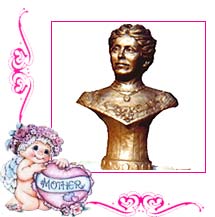
Mothers Day OriginAnna Jarvis is recognised as the Founder of Mothers Day in US. Though Anna Jarvis never married and never had kids, she is also known as the Mother of Mothers Day, an apt title for the lady who worked hard to bestow honor on all mothers.

Anna Jarvis got the inspiration of celebrating Mothers Day from her own mother Mrs Anna Marie Reeves Jarvis in her childhood. An activist and social worker, Mrs Jarvis used to express her desire that someday someone must honor all mothers, living and dead, and pay tribute to the contributions made by them.

A loving daughter, Anna never forgot her mothers word and when her mother died in 1905, she resolved to fulfill her mothers desire of having a mothers day. Growing negligent attitude of adult Americans towards their mothers and a desire to honor her mothers soared her ambitions.

To begin with Anna, send Carnations in the church service in Grafton, West Virginia to honor her mother. Carnations were her mothers favorite flower and Anna felt that they symbolised a mothers pure love. Later Anna along with her supporters wrote letters to people in positions of power lobbying for the official declaration of Mothers Day holiday. The hard work paid off. By 1911, Mother's Day was celebrated in almost every state in the Union and on May 8, 1914 President Woodrow Wilson signed a Joint Resolution designating the second Sunday in May as Mother's Day.

History of Mother's Day: Present Day Celebrations
Today Mothers Day is celebrated in several countries including US, UK, India, Denmark, Finland, Italy, Turkey, Australia, Mexico, Canada, China, Japan and Belgium. People take the day as an opportunity to pay tribute to their mothers and thank them for all their love and support. The day has become hugely popular and in several countries phone lines witness maximum traffic. There is also a tradition of gifting flowers, cards and others gift to mothers on the Mothers Day. The festival has become commercialised to a great extent. Florists, card manufacturers and gift sellers see huge business potential in the day and make good money through a rigorous advertising campaign.

It is unfortunate to note that Ms Anna Jarvis, who devoted her life for the declaration of Mothers Day holiday was deeply hurt to note the huge commercialisation of the day.
 

Origins of the wedding ring

http://www.weddingringorigins.com/

Wedding and betrothal rings - the pledges of love - have always appealed to our imaginations, emotions and yearnings. Long ago, our ancestors accepted the ring as an emblem of eternity and a symbol indicative of steadfast devotion - an interpretation quite contrary to Samuel Johnson's brusque definition of "a circular instrument placed upon the noses of hogs and the fingers of women to restrain them and bring them into subjection."

It was the ancient Egyptian who established the custom of placing a ring on the finger of his wife, as a sign that he had confidence in her ability to care for his house. The Greek and Roman bridegroom often gave a ring to the bride's father-a practice that was probably a survival of primitive bride purchase. In the second century B. C., the Roman bride was presented with a gold ring. But this she wore only in public. Such a ring was much too precious to wear while tending to household duties; and so the groom gave the bride a second ring - for use in the home - which was usually made of iron and had little knobs in the form of a key. Of course, these "key" rings were weak and could open only those locks requiring very little force to turn, but their significance, in that the wearer had the right to seal up the giver's possessions, was strong.

Probably the most imposing ring of all time was that used at the Hebrew wedding. This curious ring was shaped like the roof of a Jewish temple, and was so large and clumsy that it could not be worn in the ordinary manner. Many times it was the property of the synagogue and was borrowed for the event, for it was needed during only a portion of the ritual and was then removed. It has even been said that these huge, elaborate rings were used to hold myrtle branches at weddings.

It was not until about 860 that the Christians used the ring in marriage ceremonies, and then it was not the plain circlet that we now use, but a highly decorated device, engraved with symbolical figures of doves, lyres and even of two linked hands. Such a "Heathenish" gadget was not given a hearty reception by the Church, and for a long time its use was discouraged, though never completely abandoned.

The 13th century brought a considerable simplification in wedding and betrothal rings, and its spiritual aspect was very aptly expressed by Bishop Durant when he dubbed it a "symbol of the union of hearts." In England and Ireland, the people believed so strongly in the necessity for a ring that if a groom were too poor to buy one, he rented one for the occasion. Sometimes, also, a ring was given conditionally, as is shown by the unique, antiquated German formula: "I give you this ring as a sign of the marriage which has been promised between us providing your father gives with you a marriage portion of 1000 reichsthalers."

We cannot be sure exactly how the custom of placing the marriage or betrothal ring on the third finger of the left hand arose. It may be ascribed to the belief of the ancients' that a special vein or nerve ran directly from this finger to the heart. Then, too, it was said that this particular combination was most suitable for finery, as the left hand was used less than the right and the third finger would better protect the ring from injuries, inasmuch as it could not be "extended but in company with some other finger." Still another explanation centers about the idea of the left hand denoting subjection of wife to husband. In the Christian Church service, the priest touched three consecutive fingers, saying, "In the name of the Father, of the Son, and of the Holy Ghost," and placed the ring on the last finger touched.

Wedding rings were often worn on thumbs during the reign of George I of England, even though placed on the third finger during the ceremony. Again, Louisa of Prussia wore hers on the little finger of the right hand, while an old Russian custom bid the bridegroom to wear his ring on the forefinger.

Probably the smallest wedding ring of which we have record was that given the daughter of Henry VIII, Princess Mary, by the proxy of the Dauphin of France, son of King Francis I. The ring was tiny of necessity - not because of the daintiness of the Princess' hand, but because she was but two years old. It was essential that the Dauphin have a proxy - he had been born but seven months before the bridal ceremonies were celebrated. Thus, amid great pomp and splendor, the Lilliputian golden ring, fitted with a costly diamond, was slipped unto the baby bride's finger.

Another historic ring was that supposedly given to Martin Luther by his wife in commemoration of their marriage. After being severely censored by the Roman Catholics for committing himself to this marriage, Luther is said to have remarked that he married "to please himself, to tease the Pope and to spite the Devil." The ring, set with a ruby, bears the image of the crucifixion.

Perhaps the most popular ring of the 16th, 17th and 18th centuries was the Posy or Motto ring. The early models were impressed in French or Latin on the outside, but later rings were engraved on the inside, and in English. The mottoes were frequently of a religious quality, such as "I have obtained whom God ordained," and "'Tis God above doth seal our love." Often, however, they were less devotional as "Without my love, I backward move," or "My heart and I" A rather peculiar Posy ring was the emblematic circlet given by Bishop Cokes to his wife. It was engraved with a hand, a heart, a mitre and a death's head, and the inscription read:

"These three I give to thee,
Till the fourth set me free."

The Gimmel ring, originated in France, was initially a symbol of friendship and affection; later, however, it graduated to the position of a token of love. This "joint tenancy" ring was, in reality, a double ring, and the twin hoops were united much like the links of a chain. The two sections were constituted so that each had one flat and one convex side, and when the two flat surfaces were brought together, one ring was formed. Often, a hand formed a part of each circlet, and when these hands were clasped, the separate rings were held in place. When the lover put his finger through one hoop and his sweetheart put hers through the other, they were truly symbolically "yoked together."

Oftentimes, different varieties of stones were used to spell out sentimental words, as:

L apis lazuli O pal
V erde antique E merald
M arcasite E merald

Other times, a group of seemingly meaningless letters actually were the interlocking of two names, the one reading to the left, the other to the right.

In recent times, an artistically combined wedding ring of gold and iron has come to the front. By the blending of these two metals, the ring becomes a symbol of the union of strength and beauty. The "Latitude and Longitude" rings are also novel and of interest. A slender band on the ring shows a degree of latitude traced with longitudes. A small star is engraved at the spot where the lovers became engaged and a double star appears at the place where they were married.

Thus have wedding and betrothal rings stood the test of time - the most exacting of all critics. And it is no wonder! As Shakespeare wrote: "My ring I hold dear as my finger; 'tis part of it."
 

The habit of wearing the wedding symbol on the fourth finger of the left hand is based upon a Grecian fable that the artery from that finger flows directly to the heart. Science discredits this theory. During the Elizabethan era, fancy decreed that the ring be worn on the thumb. Use of the wedding symbol was known in Egyptian culture, and it is mentioned in the hieroglvnhics on walls of tombs archaeologists record. Generally the circlets are heavy metal, encrusted with precious or semi-precious stones. However, the average Roman citizen is reputed to have found "ugly metal bands" sufficient: Smallest wedding circlet is believed that made when Princess Mary, daughter of King Henry VIII was espoused of the dolphin of France of King Francis I. The ceremony was performed Oct. 5, 1518. The princess was two years of age, and her spouse was born Feb. 28, 1518.

The ring came into use in Christian ceremonies about 870, authorities state, and was in use in biblical times by the Hebrews. Though fashion decreed trends towards narrow bands and introduced other whimsies, the gypsy always has held firm to tradition. The broadness and weight of the golden tie decrees and denotes the position of the gypsy couple in the tribe. The bigger and heavier the circlet, the bigger and better the standing of the wedded pair.

admin/pc 29.10.11.

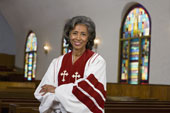
Reviews   "Women pastors / preachers? What does the Bible say about women in ministry?"

Answer:
There is perhaps no more hotly debated issue in the church today than the issue of women serving as pastors/preachers. As a result, it is very important to not see this issue as men versus women. There are women who believe women should not serve as pastors and that the Bible places restrictions on the ministry of women, and there are men who believe women can serve as preachers and that there are no restrictions on women in ministry. This is not an issue of chauvinism or discrimination. It is an issue of biblical interpretation.

The Word of God proclaims, “A woman should learn in quietness and full submission. I do not permit a woman to teach or to have authority over a man; she must be silent” (1 Timothy 2:11-12). In the church, God assigns different roles to men and women. This is a result of the way mankind was created and the way in which sin entered the world (1 Timothy 2:13-14). God, through the apostle Paul, restricts women from serving in roles of teaching and/or having spiritual authority over men. This precludes women from serving as pastors over men, which definitely includes preaching to, teaching, and having spiritual authority.

There are many “objections” to this view of women in ministry. A common one is that Paul restricts women from teaching because in the first century, women were typically uneducated. However, 1 Timothy 2:11-14 nowhere mentions educational status. If education were a qualification for ministry, the majority of Jesus' disciples would not have been qualified. A second common objection is that Paul only restricted the women of Ephesus from teaching (1 Timothy was written to Timothy, who was the pastor of the church in Ephesus). The city of Ephesus was known for its temple to Artemis, a false Greek/Roman goddess. Women were the authority in the worship of Artemis. However, the book of 1 Timothy nowhere mentions Artemis, nor does Paul mention Artemis worship as a reason for the restrictions in 1 Timothy 2:11-12.

A third common objection is that Paul is only referring to husbands and wives, not men and women in general. The Greek words in the passage could refer to husbands and wives; however, the basic meaning of the words refers to men and women. Further, the same Greek words are used in verses 8-10. Are only husbands to lift up holy hands in prayer without anger and disputing (verse 8)? Are only wives to dress modestly, have good deeds, and worship God (verses 9-10)? Of course not. Verses 8-10 clearly refer to all men and women, not only husbands and wives. There is nothing in the context that would indicate a switch to husbands and wives in verses 11-14.

Yet another frequent objection to this interpretation of women in ministry is in relation to women who held positions of leadership in the Bible, specifically Miriam, Deborah, and Huldah in the Old Testament. This objection fails to note some significant factors. First, Deborah was the only female judge among 13 male judges. Huldah was the only female prophet among dozens of male prophets mentioned in the Bible. Miriam's only connection to leadership was being the sister of Moses and Aaron. The two most prominent women in the times of the Kings were Athaliah and Jezebel—hardly examples of godly female leadership. Most significantly, though, the authority of women in the Old Testament is not relevant to the issue. The book of 1 Timothy and the other Pastoral Epistles present a new paradigm for the church—the body of Christ—and that paradigm involves the authority structure for the church, not for the nation of Israel or any other Old Testament entity.

Similar arguments are made using Priscilla and Phoebe in the New Testament. In Acts 18, Priscilla and Aquila are presented as faithful ministers for Christ. Priscilla's name is mentioned first, perhaps indicating that she was more “prominent” in ministry than her husband. However, Priscilla is nowhere described as participating in a ministry activity that is in contradiction to 1 Timothy 2:11-14. Priscilla and Aquila brought Apollos into their home and they both discipled him, explaining the Word of God to him more accurately (Acts 18:26).

In Romans 16:1, even if Phoebe is considered a “deaconess” instead of a “servant,” that does not indicate that Phoebe was a teacher in the church. “Able to teach” is given as a qualification for elders, but not deacons (1 Timothy 3:1-13; Titus 1:6-9). Elders/bishops/deacons are described as the “husband of one wife,” “a man whose children believe,” and “men worthy of respect.” Clearly the indication is that these qualifications refer to men. In addition, in 1 Timothy 3:1-13 and Titus 1:6-9, masculine pronouns are used exclusively to refer to elders/bishops/deacons.

The structure of 1 Timothy 2:11-14 makes the “reason” perfectly clear. Verse 13 begins with “for” and gives the “cause” of Paul’s statement in verses 11-12. Why should women not teach or have authority over men? Because “Adam was created first, then Eve. And Adam was not the one deceived; it was the woman who was deceived.” God created Adam first and then created Eve to be a “helper” for Adam. This order of creation has universal application in the family (Ephesians 5:22-33) and the church. The fact that Eve was deceived is also given as a reason for women not serving as pastors or having spiritual authority over men. This leads some to believe that women should not teach because they are more easily deceived. That concept is debatable, but if women are more easily deceived, why should they be allowed to teach children (who are easily deceived) and other women (who are supposedly more easily deceived)? That is not what the text says. Women are not to teach men or have spiritual authority over men because Eve was deceived. As a result, God has given men the primary teaching authority in the church.

Many women excel in gifts of hospitality, mercy, teaching, evangelism, and helps. Much of the ministry of the local church depends on women. Women in the church are not restricted from public praying or prophesying (1 Corinthians 11:5), only from having spiritual teaching authority over men. The Bible nowhere restricts women from exercising the gifts of the Holy Spirit (1 Corinthians 12). Women, just as much as men, are called to minister to others, to demonstrate the fruit of the Spirit (Galatians 5:22-23), and to proclaim the gospel to the lost (Matthew 28:18-20; Acts 1:8; 1 Peter 3:15).

God has ordained that only men are to serve in positions of spiritual teaching authority in the church. This is not because men are necessarily better teachers, or because women are inferior or less intelligent (which is not the case). It is simply the way God designed the church to function. Men are to set the example in spiritual leadership—in their lives and through their words. Women are to take a less authoritative role. Women are encouraged to teach other women (Titus 2:3-5). The Bible also does not restrict women from teaching children. The only activity women are restricted from is teaching or having spiritual authority over men. This logically would preclude women from serving as pastors to men. This does not make women less important, by any means, but rather gives them a ministry focus more in agreement with God’s plan and His gifting of them.

Recommended Resource: Women in Ministry: Four Views by Bonnidell & Robert Clouse, eds.           ADMIN/PC 2/4/2011

Translate This Page

Question: "What is the proper way to pray?"

Answer:
Is it best to pray standing up, sitting down, kneeling, or bowing down? Should our hands be open, closed, or lifted up to God? Do our eyes need to be closed when we pray? Is it better to pray in a church building or out in nature? Should we pray in the morning when we get up or at night before we go to bed? Are there certain words we need to say in our prayers? How do we begin our prayers? What is the proper way to close a prayer? These questions, and others, are common questions asked about prayer. What is the proper way to pray? Do any of the above things even matter?

Far too often, prayer is viewed as a “magic formula.” Some believe that if we do not say exactly the right things, or pray in the right position, God will not hear and answer our prayer. This is completely unbiblical. God does not answer our prayers based on when we pray, where we are, what position our body is in, or in what order we word our prayers. We are told in 1 John 5:14-15 to have confidence when we come to God in prayer, knowing He hears us and will grant whatever we ask as long as it is in His will. Similarly, John 14:13-14 declares, “And I will do whatever you ask in my name, so that the Son may bring glory to the Father. You may ask me for anything in my name, and I will do it.” According to these and many other Scriptures, God answers prayer requests based on whether they are asked according to His will and in the name of Jesus (to bring glory to Jesus).

So, what is the proper way to pray? Philippians 4:6-7 tells us to pray without being anxious, to pray about everything, and to pray with thankful hearts. God will answer all such prayers with the gift of His peace in our hearts. The proper way to pray is to pour out our hearts to God, being honest and open with God, as He already knows us better than we know ourselves. We are to present our requests to God, keeping in mind that God knows what is best and will not grant a request that is not His will for us. We are to express our love, gratitude, and worship to God in prayer without worrying about having just the right words to say. God is more interested in the content of our hearts than the eloquence of our words.

The closest the Bible comes to giving a “pattern” for prayer is the Lord’s Prayer in Matthew 6:9-13. Please understand that the Lord’s Prayer is not a prayer we are to memorize and recite to God. It is an example of the things that should go into a prayer—worship, trust in God, requests, confession, and submission. We are to pray for the things the Lord’s Prayer talks about, using our own words and “customizing” it to our own journey with God. The proper way to pray is to express our hearts to God. Sitting, standing, or kneeling; hands open or closed; eyes opened or closed; in a church, at home, or outside; in the morning or at night—these are all side issues, subject to personal preference, conviction, and appropriateness. God’s desire is for prayer to be a real and personal connection between Himself and us.
 

In closing, let me recommend that if you are a female do make it a point of duty to cover your head and if you are a male make sure not to appear before God in  an half naked condition, it must be emphasize that being caught up in prayer is a form of worship.

(courtesy of Got Questions Ministries ) thanks.

admin/pc 11/6/2011

New  Bible  Updates  Language: 'Booty' Falls By Wayside


The Old Testament will have a new look in the next edition of the New American Bible, one of the most popular English-language Bibles. And it'll also have some big changes — in many cases, words like "booty" and "virgin" are removed in the new translation.

Scholars translating from ancient Hebrew and Greek for the new Bible decided that the meaning of those words had shifted in the 40 years since the Old Testament was last updated in the New American Bible.

Here are some of the swaps included in the new Bible:

  • "booty" is now "spoils of war" — for presumably obvious reasons.
  • "virgin" becomes "young woman" — especially where the original uses the Hebrew word "almah."
  • "holocaust" will become "burnt offerings" - scholars say that was closer to the original meaning, before "holocaust" came to be identified with the genocide of World War II.
  • "cereal"— now co-opted by General Mills and Post, becomes "grain."
 

Scholars sometimes clashed as they sought to refine the Bible's language. An article from the Catholic News Service quotes Kathleen Nash, a professor who translated the book of Joel:

There were disagreements, to be sure, such as over whether the pronoun "he" should be used in all references to God, she said. Another effort was made to substitute "it" for references to the church as "she."

"That didn't fly," Nash said.

And according to Reuters, one case where "almah" will now be rendered as "young woman" instead of "virgin" in the new Bible occurs in Isiah 7:14, where the birth of Jesus Christ to a virgin mother is foretold.

"The bishops and the Bible are not signaling any sort of change in the doctrine of the virgin birth of Jesus. None whatsoever," Mary Sperry, who oversees Bible licensing for the bishops, told Reuters.

Before publication, the changes were approved by the U.S. Conference of Catholic Bishops. The new volume, called the New American Bible Revised Edition, will come out in a variety of paper and digital formats, including as a cellphone app.


 admin/pc 3/4/2011.

5. MESSIAHSHIP

Jesus proved His Messiah-ship by remaining in the tomb exactly 3 days and 3 nights; being crucified in the midst of the week (the fourth day, Wednesday), and rising from the dead in the end of the Sabbath (Saturday).

Matt. 12:39-40; Daniel. 9:27; John 19:31; Matt. 28:1-6.

Illustration prepared by Pastor Peter Collman 13.7.13 admin


1 2 3 4 4 5 5 6 6 7 7


motw motw HDS HDS PREP DAY PREP DAY 7DS 7DS 1s day 1st day
Sun Mon Tue Wed nite Wed day Thu nite Thu day Friday Friday sabbath sabbath Sun d Sun d


visit tomb


by women


to spice


body


removal from


accension from


the tree


the cave


b4 sunset


guarded by


soldiers


1nite 1 day 2 nite 2day 3 nite 3day